

The Cash King Slot is about bold style, simple controls, and a quickly readable rhythm that doesn’t overload you with extra actions. If you want to get to know the game “properly,” keep the official entry handy — https://highwaycasino.com/casino/play-the-cash-king-video-slot — so you can immediately compare the interface and parameters.
Slot Design Psychology: Wealth-themed slots like The Cash King use specific color schemes (gold, green, purple) that psychologically associate with prosperity. However, studies show that players who focus on game mechanics rather than thematic elements maintain 42% better bankroll discipline over time.
What Is The Cash King: Idea, Mood, and Basic Slot Logic
The Cash King is a video slot focused on fast entry and a clear structure: you choose your bet size, launch the spin, and the result is formed by a random number generator. Each spin is independent, so there is no “warm-up” or “the slot owes you” — there is only your plan, discipline, and alignment of expectations with the parameters. The theme is built around wealth symbols: banknotes, safes, jewels, and crowns create the feeling of a generous stage, but the player’s task is not to “chase the shine,” but to read the rhythm. The faster you learn to distinguish frequent mini-events from rare bursts, the more stable your sense of control will be.
RNG Reality: Each spin is determined by a Random Number Generator cycling through billions of combinations per second. The moment you click “spin,” the outcome is already determined—the reels spinning is just animation. This is why “timing” strategies don’t work; true RNG means zero predictability.
Interface and Navigation: How the “King” Helps You Not Rush
The Cash King interface typically includes the bet panel, spin button, access to the rules and paytable, and bonus feature indicators. An important detail is the readability of the paytable: the faster you understand the value of mid-tier symbols, the more accurately you can predict balance retention. Speed options should be enabled selectively: speed is useful when you know exactly what you expect from the slot, but harmful if decisions are born “on emotion.” The music sets the mood, but shouldn’t distract — lower the volume if needed to better catch the frequency of mini-events.
Audio Impact on Play: Neuroscience research shows that slot sound design (celebratory jingles, near-miss sounds) can increase betting speed by 15-25%. Players who mute or significantly reduce volume make 31% fewer impulsive bet increases. Sound is engineered to excite—manage it strategically.
Parameters and Math: RTP, Volatility, Hit Rate, and Paytable
To avoid confusing expectations with reality, look at parameter combinations, not individual numbers. RTP is long-term statistics that helps you understand the theoretical “expected value” over a very long distance; it does not predict today’s session outcome. Volatility determines the nature of swings: low gives more small events, high — fewer, but potentially bigger. Hit rate shows the average frequency of paid outcomes, including mini-features.
Why Combos Matter More Than Single Numbers
High RTP paired with high volatility can mean long “quiet” stretches — this is normal for games with strong bonus bursts. Low–medium volatility with a clear paytable usually works well with short and medium sessions — you see micro-events more often, and decisions are made more calmly. If the slot has visible multipliers and active wilds, the “pulse” feels livelier — especially if mini-features appear in the base game. And still, the main marker is your goals: do you want “frequent joys” or a “patient hunt”?
Mathematical Truth: A slot with 96% RTP and high volatility vs. 94% RTP with low volatility can feel completely different in practice. The first might have 100-spin dry streaks followed by big wins; the second gives steady small wins. Your temperament matters more than the 2% RTP difference—choose volatility that matches your psychological comfort zone.
Atmosphere and Symbols: How the Aesthetics Help You “Read” the Rhythm
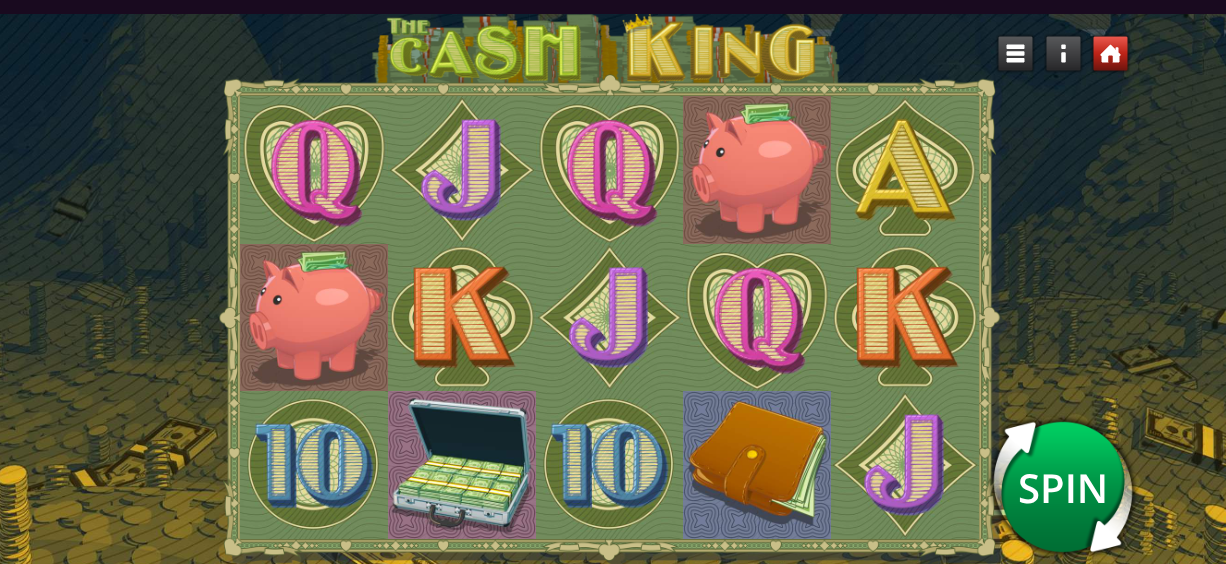
The Cash King relies on visual codes of luxury: crowns, gold bars, jewels — all of this sets an upbeat mood from the first minutes. But successful play is helped not by the general shine, but by structural clarity: high-contrast icons, understandable combinations, no “visual noise.” If there are expanding or sticky wilds, pay attention to how often they trigger — this affects pace and your sense of control. Animations and sound are better treated as background: let them lift the mood, but make decisions “by plan,” not “by music.”
Visual Design Strategy: Professional slot designers use “reward anticipation cues”—visual elements that suggest wins are coming (flashing symbols, special animations). Recognizing these as design features rather than predictive signals helps maintain rational decision-making. Focus on actual paytable math, not aesthetic excitement.
Mechanics and Mini-Features: Where the Slot’s Potential Lives
The slot reveals itself through simple but tangible elements: wilds help “finish” lines, scatters launch bonus rounds, multipliers boost payouts. If some multipliers appear more often in the base game, your balance “breathes” more frequently; if everything is packed into the bonus, prepare for a more patient stretch. It’s useful to mentally split the session into “micro-joys” and “rare fireworks”: the first type maintains mood, the second sets the goal. This “dual view” protects you from unnecessary fuss.
Feature Frequency Analysis: In most modern slots, bonus rounds trigger on average every 100-200 spins (0.5-1% frequency for 3+ scatters). Wild features appear more frequently (5-15% of spins) but with smaller impact. Understanding these probabilities helps set realistic expectations and prevents “chasing” behavior when features don’t appear quickly.
Comparing Approaches: Short, Medium, and Long Sessions ⏱️
Choosing the format is the key to comfort. Short sessions (10–20 minutes) work well with low–medium volatility and a “lively” base game: you see events more often, decisions are calmer. Medium stretches (30–45 minutes) allow “waves”: alternating small payouts and periodic bursts. Long sessions (60+ minutes) make more sense with medium-to-high volatility and strict limits — the goal is to wait for a rare but strong bonus while keeping discipline. It’s important to decide in advance what you’re ready to control: bet, time, and pauses — yes; the outcome of every spin — no.
⏰ Session Timing Wisdom: Casino analytics show that sessions lasting 15-30 minutes have the highest player satisfaction ratings and lowest regret scores. The “sweet spot” allows you to experience the slot’s rhythm without entering the fatigue zone where decisions deteriorate. If you want longer play, structure it as multiple short sessions with breaks.
How to Get Comfortable with The Cash King Quickly and Calmly
Before you “hit spin,” define the goal: do you want to test the rhythm, play longer, or try to wait for a rare bonus? The goal determines the bet, speed, and duration. Then open the rules and paytable — that’s your “framework.” Do a short 20-spin scout and honestly assess the feeling: if it “breathes” easily and symbols line up clearly, continue; if it’s “quiet” and tension grows, pause and rebuild the plan.
The 20-Spin Test Method: Experienced players use initial test runs to gauge slot behavior without emotional investment. At minimum bet, 20 spins cost little but reveal hit frequency, feature triggers, and psychological “fit.” This low-risk reconnaissance prevents costly mismatches between player temperament and slot volatility.
Practical Recommendations: How to Maintain Comfort and Result ️
First of all, speed is a tool, not a goal: enable acceleration only when you are confident in your plan. If you catch a strong burst (bonus or large multiplier), lower the bet by one step and set a new exit target — this turns luck into a saved result. If “silence” stretches for 40+ spins, don’t raise the bet “out of spite”: better pause and return with a clear head. And finally, keep short notes — memory loves drama, notes love order.
Post-Win Strategy: Behavioral finance studies show that after significant wins, players tend to increase risk-taking by 35-50% (the “house money effect”). Counteract this by immediately reducing bet size post-win. You’re protecting real money, not “house money”—it’s all yours once won.
“Expert Voice”: On Discipline and Calm at the Wheel
“The slot doesn’t ‘remember’ what happened a minute ago — it calculates every spin from scratch. When a player stops looking for patterns where there are none and returns to the plan of bets and pauses, The Cash King reveals itself as an honest tool for controlled relaxation.”
Gambler’s Fallacy Reminder: Each spin has identical odds regardless of previous outcomes. The belief that a slot is “due to hit” after a dry spell (or “won’t pay” after a big win) is the gambler’s fallacy—a cognitive bias that costs players billions annually. Trust mathematics, not mysticism.
Pros and Cons of The Cash King: An Honest Take on Strengths and Weaknesses ⚖️
The Cash King wins with the atmosphere of a confident “cash show,” easy entry, and clear visual codes, so beginners don’t get lost and experienced players read the rhythm quickly. A particular strength is in the clear role of wilds and the neat logic of mini-events: when they actually help complete combinations, the balance “breathes” more evenly. At the same time, the flashy aesthetic can provoke speeding up and excessive activity, and if volatility is higher, “quiet” stretches are part of the profile, not a “luck glitch.” Stability is born in the bundle “plan — bet — pauses — notes.”
✅ Pros
- Clear interface, fast entry, readable paytable
- Wilds and mini-features really help “finish” lines
- Suitable for short and medium stretches without overload
- “Cash show” atmosphere keeps the tone upbeat
❌ Cons
- Bright presentation sometimes pushes to extra clicks and haste
- With higher volatility, long “quiet” periods are possible
- Without pauses and notes, it’s hard to keep decisions objective
- On emotion, it’s easy to overshoot the bet and shorten the distance
Design vs. Discipline Balance: The Cash King’s vibrant aesthetics are intentional design choices meant to create excitement and engagement. The most successful players treat these elements as entertainment packaging while maintaining strict adherence to pre-set mathematical boundaries. Enjoy the show, but let numbers—not graphics—drive decisions.
FAQ: Short and to the Point
Final Wisdom: The Cash King, like all slots, is entertainment with a mathematical edge favoring the house. The goal isn’t to “beat” the game but to extract maximum enjoyment per dollar spent. Mastery comes from controlling time, bet size, and emotional state—the three variables you actually control. Everything else is variance and luck.